Light
Bright light: an east window, or 12–14 hours a day under a grow light. Skip harsh afternoon sun.
Care guide · Pinguicula
Pings are easy once you know three rules. The rest of this page is detail for when you want it.
Distilled, RO or rain water only. Never tap, filtered (Brita) or spring water.
Keep water out of the center. Use a tray, or water the soil around the plant. A squeeze bottle makes it easy.
Keep potting soil and fertilizer out of the pot. Feed only with a light spray on the leaves.
Day one
Your plant ships bare root, without soil, so it travels clean and dry.
Pings aren't fussy. Any gritty mix that drains well will do, as long as it has no potting soil or fertilizer in it.
The roots are tiny. Poke a small hole with a chopstick, set the plant in up to the base of its leaves and firm the mix around it.
Water it in around the edge and keep the mix evenly damp for the first week or two, in a bright spot out of direct sun.
It has settled in when sticky dew shows on the leaves again, usually in 1–2 weeks. A few older leaves drying off meanwhile is normal. Don't feed it until then.
Bright light: an east window, or 12–14 hours a day under a grow light. Skip harsh afternoon sun.
Stand the pot in a tray of distilled, RO or rain water. Let the tray dry out, then refill it. Or water the soil around the plant with a squeeze bottle when the top starts to dry.
It catches fungus gnats on its own. For a boost, spray the leaves every other week with Schultz Cactus fertilizer mixed per the bottle, keeping it off the soil. Skip it in winter.
60–85°F, normal room temperatures all year. Keep it above 50°F and never let it freeze.
Normal room air is fine. No terrarium needed.
Not needed often. Every year or two in spring, move it into fresh gritty mix.
The winter rest
As the days get shorter, most Mexican butterworts stop making sticky leaves and shrink into a tight rosette of small, fleshy ones for two to four months. This is its normal winter rest.
Water much less. Let the tray dry and leave it empty. Give a small drink only after the mix has been dry for a few days. Keep the light the same and skip the fertilizer. When big sticky leaves come back in spring, go back to the tray.
In the wild they grow on rock and drink rain. Tap, filtered and spring water carry dissolved minerals that build up in the pot and slowly burn the roots. A grocery-store gallon of distilled water lasts months.
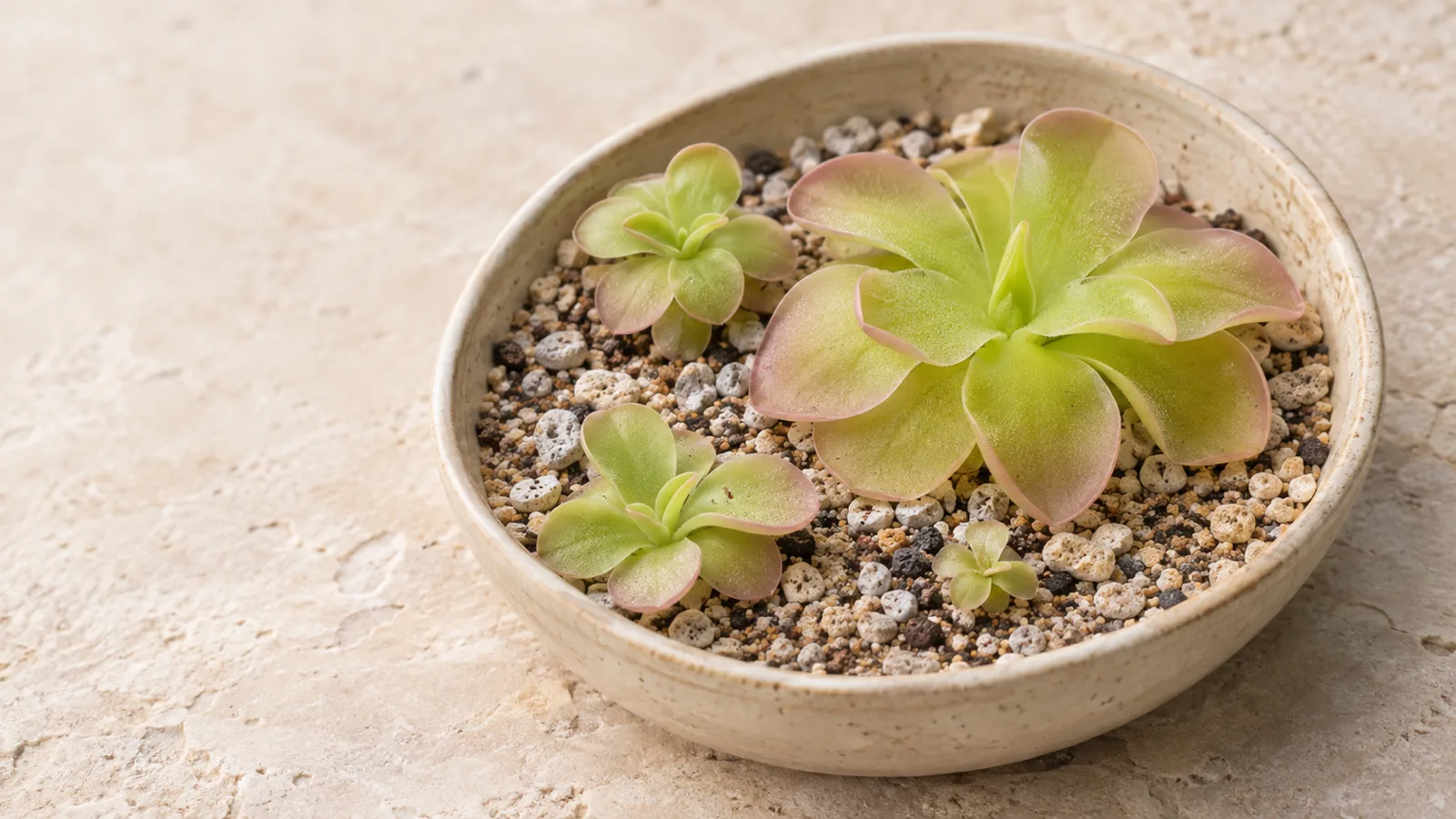
Enough light looks like a flat, compact rosette with short leaves and visible dew. Too little makes the leaves stretch up, longer, thinner and floppier. The pink and red is the plant blushing under strong light, a kind of suntan. Ours grow under bright grow lights, so yours may turn greener in a softer window or blush even deeper in a sunny one. Either way it's healthy. Some kinds stay green no matter what.
| What you see | What it means |
|---|---|
| Suddenly small and compact | Normal winter rest. Water less. |
| Soft, see-through rosette in winter | Too much water while it rests. Stop watering and let it dry. |
| Mushy brown center | Rot from water in the crown. Keep water out of the center. |
| Pale and stretched | Needs more light. |
| Lost its pink or red | Normal. The color comes from strong light, and yours has less than our grow lights. A brighter spot brings it back. |
| Crispy brown edges | Too hot and dry, or the wrong water. |
| White crust on the soil | Mineral buildup. Switch to distilled and flush the pot. |
| Leaves not sticky | Winter, dry air, or it just ate. Usually fine. |
PingsViolets · Thank you for growing with us · pingsviolets.com/care